
Drawing on a career built through real estate negotiations, residential developments and logistics opportunities, Brazilian businessman prepares Aliança Enterprise Corp. to develop projects in Florida, connecting commercial vision, feasibility analysis and long-term planning
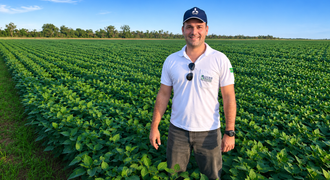
In real estate, identifying an opportunity is only the beginning. Between recognizing potential and bringing a development to fruition lies a series of decisions involving negotiation, economic evaluation, risk analysis, coordination among different stakeholders and the ability to turn commercial objectives into viable projects. It is in this space between opportunity and its structuring that the business career of Fernando Chalela dos Santos has taken shape. A Brazilian professional who has built experience across different areas of the real estate sector, he is now directing his business planning towards the United States.
With professional training beginning in 2008 and market activity dating back to 2010, according to his background, Chalela began working in residential development sales, land negotiations, relationships with developers and the development of commercial opportunities. His experience also includes negotiations associated with logistics projects, including build-to-suit arrangements, in which properties are developed or adapted to meet the specific needs of an occupant. This path brought him into contact with different stages of real estate activity, from identifying assets and bringing interested parties together to the commercial discussions that precede the structuring of a transaction.
The breadth of this environment helps explain the nature of the work. A property may appear promising because of its location, but its feasibility depends on factors such as zoning, infrastructure, demand, building capacity, development costs, financing conditions and legal risks. Similarly, a residential development must align with the characteristics of the audience it intends to serve, while a logistics project must respond to concrete operational requirements, such as access to transportation routes, the movement of goods, labour availability and distribution efficiency. Commercial negotiation is important, but its value increases when it is supported by a sound understanding of the conditions that can determine a project’s success.
It is at this intersection of commercial relationships and business structuring that one important dimension of Chalela’s experience is found. The real estate market depends on stakeholders with different interests, including property owners, developers, investors, operators and future occupants. Bringing these parties together requires an understanding of their priorities, the ability to identify common ground and an assessment of whether the terms of an opportunity can support an agreement. In more complex transactions, relationship-building must be accompanied by technical and financial criteria that make it possible to address responsibilities, risks and expectations clearly.
Among the experiences reported by Chalela are transactions associated with residential developments in the Domo line and negotiations related to real estate and logistics projects. These records form part of the professional background underpinning his next business chapter. The extent of his involvement in each transaction, as well as the specific results, should be understood in accordance with the available documentation and the responsibilities he actually carried out. This distinction is particularly important in a sector where the outcome of a development normally depends on the collaboration of different professionals, companies and investors.
The experience gained in Brazil is now informing plans for an international operation through Aliança Enterprise Corp., a company established in Florida, with its reported headquarters in Winter Garden, in Orange County. The company’s business plan sets out a strategic horizon from 2026 to 2030 and proposes a platform dedicated to project origination, evaluation, structuring and coordination. The initial priority is Central Florida, where the company intends to develop commercial relationships and assess opportunities according to local conditions, resource availability and the formation of qualified partnerships.
The decision to establish an operation in the United States represents more than a geographical change. International expansion requires adaptation to a different regulatory environment, new commercial relationships, knowledge of each market’s particularities and an understanding of the practices used by local professionals. Experience gained in one country can provide a foundation for identifying opportunities and conducting negotiations, but it does not replace the need to validate each project within the context in which it will be developed. For a company in the planning stage, establishing this foundation is an essential part of the journey from strategy to execution.
Central Florida offers a relevant setting in which to examine this transition. The Orlando region is part of an economic corridor connecting residential areas, commercial activity, distribution and industrial operations. Data published by Colliers on the industrial market in central and western Florida indicated, in the fourth quarter of 2025, demand increasingly focused on operational efficiency, access to labour and transportation logistics. The report also noted that land constraints and rising prices influence development decisions, encouraging more careful analysis of location and infrastructure.
This context helps explain why planning real estate and logistics projects requires an integrated perspective. A region’s growth does not automatically make every development viable. Land availability, construction costs, competition among assets, financing conditions and the profile of prospective occupants can significantly affect the attractiveness of an opportunity. The business challenge is to distinguish general market trends from the specific conditions of each project, avoiding the confusion of growth expectations with guarantees of return.
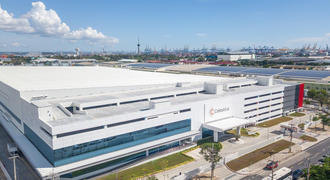
In the logistics segment, this assessment takes on its own characteristics. The build-to-suit model begins with an occupant’s defined operational needs, with a property developed or adapted according to negotiated specifications. This structure can serve companies that require facilities suited to their operations, but it depends on alignment among technical requirements, location, timelines, costs and contractual commitments. The analysis must consider not only the property’s potential, but also the consistency of demand and the ability to meet the agreed terms. For Chalela, whose career includes negotiations related to this type of opportunity, the segment is part of the experience he intends to bring into this new business phase.
Aliança Enterprise Corp.’s plan encompasses several areas of activity. Aliança Living is associated with multifamily residential opportunities, while Aliança Green Logistics focuses on industrial, logistics and build-to-suit projects. The plan also includes PHS Clara, dedicated to infrastructure and technology initiatives supporting diagnostic services, subject to applicable regulatory requirements, and Cross-Border Capital Bridge, conceived for governance, analysis and operational coordination of cross-border projects. These areas form part of the business strategy planned for 2026 to 2030 and should not be confused with completed transactions or consolidated commercial results.
The diversity of these initiatives points to a proposed model that seeks to bring opportunity assessment, coordination and planning together within a single business structure. At the same time, each area has its own characteristics and requirements. Residential projects depend on demand analysis, the profile of future residents, costs and development conditions. Logistics developments require attention to operators’ needs, transportation infrastructure and occupancy commitments. Initiatives involving technology to support diagnostic services, in turn, must comply with the relevant technical and regulatory requirements. The ability to establish clear boundaries between these activities and engage the appropriate professionals will be critical to executing the plan.
Governance therefore occupies an important place in the company’s stated strategy. The plan anticipates investment evaluation procedures, legal and financial due diligence, risk analysis and performance monitoring. It also establishes guidelines that include separating the company’s own resources from third-party capital, verifying each development’s economic feasibility and involving qualified professionals in activities subject to licensing. In cross-border business, clarity around responsibilities, documentation and decision-making criteria can help reduce uncertainty and make it easier for different participants to assess opportunities.
For a businessperson seeking to adapt his experience to another market, governance also represents a change in scale in how decisions are organized. Commercial knowledge helps identify possibilities, but sustainable expansion depends on processes that can be repeated, evaluated and improved. This involves documenting assumptions, verifying information, understanding contractual obligations and monitoring each project’s progress. Analytical discipline does not eliminate the risks inherent in the real estate market, but it allows decisions to be made with greater clarity about the factors that may affect outcomes.
Chalela’s leadership outlook is closely tied to this challenge: transforming professional experience built through different negotiations into a business structure prepared to operate in an international environment. Leadership, in this case, is not limited to setting a strategic direction. It also depends on the ability to recognize the limits of one’s own knowledge, build relationships with local specialists, assess the quality of available information and adapt plans when market conditions require it. In a new operation, credibility develops through consistency between what is planned, what is executed and what can be demonstrated.
The 2026 to 2030 horizon establishes a period for the development of Aliança Enterprise Corp., with financial targets and team expansion goals set out in management planning. These indicators depend on commercial progress, project feasibility, the formation of partnerships and the ability to adapt the operation to US regulations. They are projections, not results already achieved. This distinction matters because it makes it possible to assess the initiative for what it represents at this stage: a business plan intended to organize entry into and the development of activities in a market different from the one in which its founder gained his previous experience.
International expansion also creates an opportunity for broader reflection on the role of businesspeople who help bring real estate ventures together. In an environment where projects may involve capital, technical knowledge and participants from different countries, the ability to build bridges between markets requires more than establishing contacts. It is necessary to understand local economic conditions, comply with legal requirements, identify qualified professionals and assess whether the interests involved can be brought together within a sustainable structure. Knowledge accumulated through previous negotiations can serve as a starting point, provided it is accompanied by ongoing learning and validation.
The career of Fernando Chalela dos Santos is therefore at a transition point between experience and expansion. His background in the Brazilian real estate market, including residential sales, land negotiations, relationships with developers and logistics opportunities, provides the professional foundation for the strategy associated with Aliança Enterprise Corp. The challenge now is to turn this experience into a consistent international operation, with projects assessed individually, appropriate partnerships and processes capable of addressing the complexity of each initiative.
For the market, the evolution of this proposal will be measured less by the breadth of the plan on paper than by the ability to execute it over time. Viable projects, sustainable commercial relationships, regulatory compliance and documented results will be the elements that can demonstrate the strategy’s effectiveness. For Chalela, this stage represents an opportunity to apply the skills developed throughout his career in another business environment, expanding his activities while keeping in mind an essential principle of the sector: an opportunity becomes a business only when its feasibility is examined, its structure is defined and its execution can respond to real market conditions.