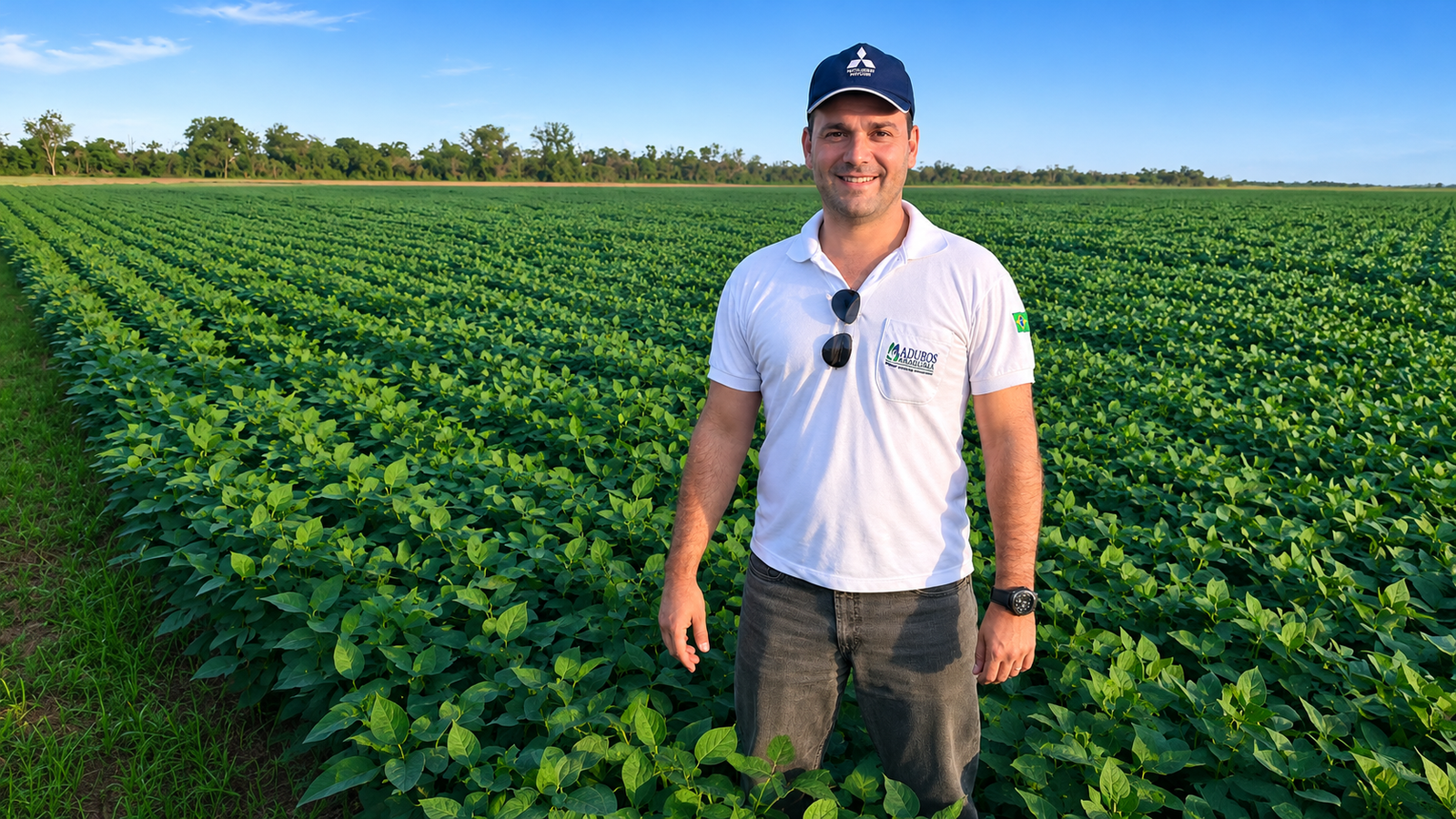
With a field notebook, a spreadsheet, and plenty of persistence, Goiás-born agronomist Walter Luiz Ribeiro Adriano proved that sound farm management is demonstrated in numbers, not rhetoric
There were three dairy farms under the same magnifying glass. Same region, same technical assistance, same analysis period. When the data was compiled and published in issue no. 396 of Revista COMIGO, one of them stood ahead in practically every herd reproduction indicator. In the article, it was referred to simply as “Farm 1”. In Jandaia, in the interior of Goiás, everyone knew which farm it was: Água Virada, owned by Walter Adriano.
For those who know the agronomist, the outcome came as no surprise. Walter follows a simple rule that he has put into practice for more than 14 years: what isn’t recorded cannot be improved. It was with this conviction that he transformed a 167-hectare and 97-are property into a regional benchmark for efficiency.
Walter has owned Água Virada since late 1998, but it was his degree in Agronomy from the Federal University of Goiás, completed in 2009, that brought methodology to what had previously been an emotional bond with the land. The program, with an emphasis on rural enterprise management, changed the way he looked at his own farm. That same year, he received his professional registration as an agricultural engineer with CREA-GO. In March 2010, he took over sole, full-time management of the property.
From that point onward, every decision had numbers behind it. Walter structured the farm around three mutually supporting fronts. In dairy, he chose a higher-value path: A2A2 milk, produced by Girolando cows selected to generate only A2 beta-casein, a protein that is easier to digest and increasingly sought after by consumers. In beef cattle, he invested in selecting superior genetics of Tabapuã, a Brazilian zebu breed renowned for its hardiness, fertility, and meat quality. And in cropping, he put soybeans and corn to work in favour of the herd.
This integration is one of the finest examples of his mindset as a manager. Crop rotation ensures silage and pasture for the cattle, keeps the soil covered for no-till farming, and secures feed for the animals precisely during the dry season, when most farms in the region feel the pinch. A single hectare generates multiple revenue streams, feed costs stay under control, and the property also lowers its carbon emissions.
The major leap, however, came when Walter decided to bring data from the corral to the screen. Alongside veterinarian Hemersonn Alexandre Rolim of the COMIGO cooperative, he implemented Super-Pec, an online system that tracks the reproductive and productive history of every animal. The daily routine changed: every heat cycle, every insemination, every calving, and every litre began to be logged into the system. “Through this project, we digitized and organized the farm’s data,” recalls Rolim, who has followed Walter’s career for more than twenty years.
The results appeared in the analysis published by Rolim in Revista COMIGO, in the article “The Importance of Zootechnical Analyses for Decision-Making on Dairy Farms”, which monitored the properties between November 2020 and November 2021. At Água Virada, cows calved on average every 11.58 months, outperforming even the technical benchmark of one calving per year. On the other two farms, that interval exceeded 13 and 14 months. In practical terms, this means more calves and more lactations over each cow’s productive lifespan.
The gap repeated itself across other indicators. Água Virada’s pregnancy rate reached 18.79%, more than double the 7.79% and 9.01% recorded by its neighbours. Its conception rate stood at 46.94%, compared to 29.85% and 24.09%. Each pregnancy required an average of 1.97 inseminations—fewer than on the other properties—translating into direct savings on semen, labour, and handling. Meanwhile, the interval from calving to new conception averaged 128 days, roughly two months shorter than on the other farms.
The article attributes this performance to three factors rooted in management rather than luck: accurate heat detection, inseminator training, and careful attention to cow body condition. The other properties, operating more intensive systems, produced more milk per hectare. Água Virada’s strength lay in herd efficiency, which forms the foundation for safe expansion in subsequent cycles. “His dedication to implementing pioneering agricultural management practices positioned his farm as a beacon of excellence in our region,” says Rolim.
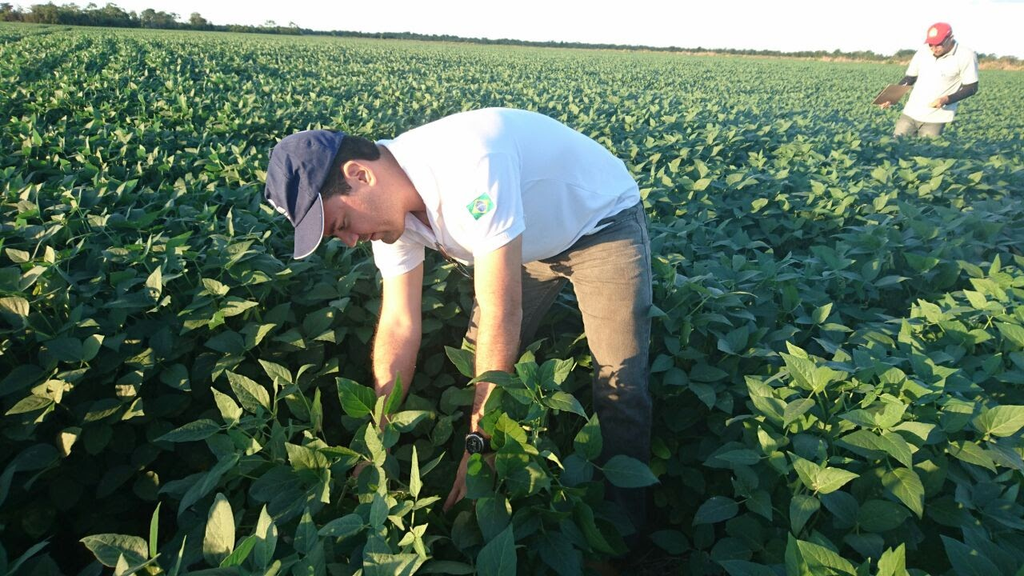
Walter carried the same discipline he applied at his own farm gate into public service. After passing a competitive civil service exam, he took office in April 2013 as an Agricultural Defence Inspector with ADAPEC, the agricultural defence agency of the state of Tocantins. For more than four years, he balanced full-time regulatory inspection work with overseeing his farm. At the agency, he planned and carried out inspections, investigated irregularities, and enforced statutory penalties.
Colleague Valdiney Ferreira Alves, who shared fieldwork with him between 2015 and 2018, recalls inspecting fields under the seed production program and surveying irrigation techniques in Lagoa da Confusão and Formoso do Araguaia right in the middle of the phytosanitary fallow period. “Walter demonstrated unmatched dedication to ensuring regulatory compliance and safeguarding the integrity of our agricultural sector,” he recounts.
Agricultural engineer Fábia Guimarães Alves, who coordinates the agency’s Phytosanitary Certification Program, holds another memory: the community talks the two delivered on agricultural safety, food, and hygiene. To her, her colleague’s defining trait is autonomy. “Walter is a problem solver, always looking for ways to improve processes or outcomes without needing constant external direction,” she says.
In September 2017, Walter took leave from the agency to once again devote all his time to Água Virada. Peer recognition followed him throughout this path, particularly in roles tied to oversight and sound governance. He helped found the ADAPEC employees’ association and served on its Audit Committee between 2014 and 2016. Later, he was elected to the Audit Committee of the Jandaia Dairy Producers’ Association, Jandaia Mais Leite, where he served from 2017 to 2019. He has also been a member of the COMIGO cooperative since 2011 and of the Palminópolis Mixed Agro-Industrial Cooperative since 2022.
In recent years, Walter began doing with his own knowledge what he had done with his farm: organizing it, documenting it, and making it replicable. In 2026, at the helm of Walter’s Agribusiness Consulting, where he serves as founder and principal consultant, he published five technical papers tailored for mid-sized farms that rarely have in-house technical teams.
Across all five studies, the central concern remains the same one that has guided his career: making every dollar invested go further. In his paper on precision agriculture, he shows that adopting technologies gradually—starting with a proper diagnostic—yields higher returns and lower risk than buying everything at once. On a farm of roughly 240 hectares, capital exposure stays under US$6,000, while net present value reaches approximately US$30,700, compared to US$20,300 under an all-at-once purchase.
In his guide to sustainable practices, Walter combines cover crops, integrated pest management, and sensor-based irrigation with a straightforward record-keeping system, yielding savings of 5% to 25% on inputs, water, and energy according to the literature he compiled. There, once again, his obsession with record-keeping surfaces: he estimates that an average farm loses 15 to 25 hours a year simply trying to reconstruct information requested by buyers, banks, insurers, and public agencies.
His remaining papers follow the same thread. One outlines a five-step roadmap to evaluate the feasibility of exporting agricultural products to Brazil. Another advocates for tailored consulting built around a joint diagnostic with the producer, a limited number of recommendations at a time, and scheduled follow-ups. The final study examines how Cerrado agriculture—growing rapidly with lean teams—developed record-keeping discipline, crop-by-crop planning, and coordination among partners: qualities that rely far more on organization than on capital.
Anyone looking at Walter Adriano’s trajectory finds a thread that never breaks. On the farm, in regulatory inspection, or in consulting, he consistently follows the exact same sequence: he measures, records, compares, and only then decides. That is how he placed Água Virada at the top of the region’s reproductive benchmarks—and how he aims to help other producers turn management into results.