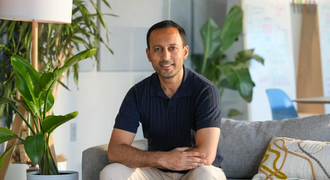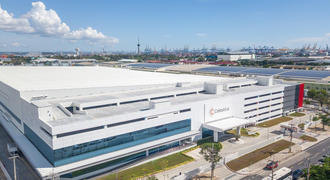
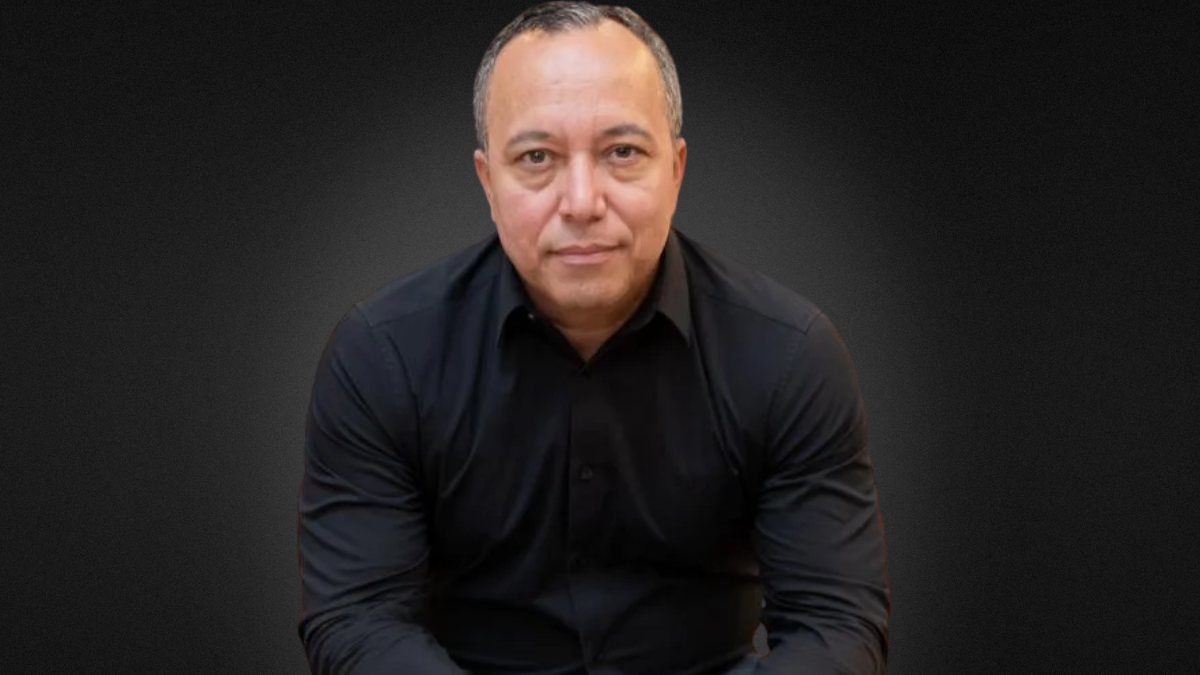
Luciano Bravo is reshaping access to international capital through Latin America’s first integrated cross-border financial ecosystem, connecting Brazilian businesses to global funding opportunities and redefining the future of corporate finance
In the global financial landscape, few disparities are as pronounced as the distribution of long-term capital to businesses in emerging markets. While conglomerates in North America and Europe raise funds at single-digit simple interest rates with repayment periods extending to fifteen years, entrepreneurs in Latin America face an environment dominated by extreme banking concentration, burdensome compound interest rates and repayment terms that are incompatible with the development cycles of major productive projects. In Brazil, where the five largest banks have at times accounted for approximately 80% of credit, the expansion of vital sectors such as agribusiness, manufacturing and infrastructure has historically encountered an invisible but relentless barrier: the scarcity of long-term corporate liquidity.
It was precisely to break this structural constraint that Luciano Bravo conceived, developed and consolidated the ACI Ecosystem. Recognized in financial markets as one of the pioneers and the leading authority on international credit structuring in Brazil, Luciano Bravo now positions himself as the sole reference point on the subject in Latin America. With more than three decades of entrepreneurial experience leading highly complex projects in the industrial, agricultural, logistics and merchant marine sectors, Bravo transformed a longstanding market gap into a form of capital engineering unprecedented in the region.
The result of this strategic vision is Latin America’s first integrated ecosystem for raising and structuring international credit: a financial intelligence architecture that has already secured approval for more than US$1 billion in international funding for corporate expansion and has underwriting capacity exceeding €2 billion in Project Finance transactions in Europe and US$1.4 billion in Private Hard Lending facilities in the United States and the United Kingdom.
The anatomy of a disparity and Luciano Bravo’s diagnosis
To understand the scale of Luciano Bravo’s impact, it is essential to examine the technical diagnosis that gave rise to the ACI Ecosystem. Latin America’s traditional banking structure operates according to a model that penalizes wealth-generating entrepreneurs. In the United States, the market has more than 4,300 banking institutions, creating a highly dispersed competitive landscape. This abundance of financial institutions allows U.S. companies to access credit volumes of up to 500% of revenue, at single-digit rates or rates slightly above 10% annually, calculated using simple interest.
In Brazil, the situation reflects a chronic bottleneck. With approximately 160 active banking institutions, the average rate charged to productive businesses ranges from 18% to 28% annually on a compound-interest basis, with terms rarely exceeding three years and lending limits capped at 20% to 30% of the value of real estate pledged as collateral. This dynamic redirects corporate cash flow toward servicing short-term debt, creating a situation in which credit ceases to be a lever for expansion and instead becomes a drag on a company’s assets.
“Credit in Brazil is not directed toward those who produce, but toward supporting consumption and public spending. In practice, productive entrepreneurs remain dependent on a system that was not designed to finance long-term growth. Our mission with ACI was precisely to break that dependence, enabling Brazil’s medium-sized and large companies to operate with the same capital structure as the world’s largest multinationals.”
Luciano Bravo
The figures support the executive’s analysis. According to data published by Agência Brasil, fewer than 0.1% of Brazilian companies—approximately 19,000 corporations—have been able to access international capital markets directly. Nevertheless, according to an analysis by economist Gustavo Franco, former president of Brazil’s Central Bank, this select group accounts for more than 33% of national gross domestic product, with productivity levels up to twenty times higher than the average among companies restricted to the domestic banking system. Market examples such as Aegea in sanitation, Global Eggs in agribusiness, JBS in food production and WEG in manufacturing—all unrelated to ACI—demonstrate how access to global credit can exponentially transform an organization’s operating scale, EBITDA and share liquidity.
Modular financial engineering and the structure of the ACI Ecosystem
Luciano Bravo’s disruptive innovation lay in creating a permanent, highly specialized institutional bridge between domestic productive assets and major international debt funds based in Luxembourg, London, New York and Dubai. The ACI Ecosystem is not merely a financial intermediary; it is a comprehensive value-engineering platform built around five fundamental pillars:
| ACI Ecosystem Pillar | Scale & Capacity | Strategic Role in the Transaction |
| ACI Core Platform | Present in 19+ states Over R$10 billion in assets assessed | Dedicated technology infrastructure for real estate and corporate analysis, enabling access to international credit in Brazil. |
| CTG (Temporary Assignment of Guarantees) | Over R$10 billion in land bank assets | Provides access to real estate for structuring corporate property collateral during the transition period. |
| Lumnis Educacional | Over 400 professionals trained Courses with MEC-recognized certification and an academic partnership with SSBM (Switzerland) | Brazil’s first educational institution specializing in international credit, training credit qualification agents in more than 19 states. |
| Private Hard Lending (PHL) | Over US$1.4 billion in underwriting Facilities: US$10M to US$50M | Bridge loans secured by real estate collateral, with a bullet structure of up to 5 years (monthly interest only; principal due at maturity) and simple annual interest of 10% to 12%. |
| Project Finance (PFAI) | Over €2 billion in underwriting Facilities: €100M to €400M | Principal off-balance-sheet financing with repayment over 6 to 15 years and simple annual interest of 6% to 8%. |
The financing operations themselves are divided into two complementary structures. The first is Private Hard Lending (PHL), designed as a bridge loan with facilities ranging from US$10 million to US$50 million. This option uses a bullet repayment structure with a term of up to five years, under which the borrower pays only monthly interest and repays the principal at maturity, at simple annual interest rates of 10% to 12%. This preserves working capital in full to accelerate business growth.
The second structure, representing the pinnacle of the ecosystem’s financial engineering, is Project Finance Assets Investments (PFAI). This is a principal off-balance-sheet financing facility ranging from €100 million to €400 million per project, with repayment periods of 6 to 15 years and reduced simple annual interest rates of 6% to 8%.
“Selling the future with international credibility to finance expansion in the present. The Project Finance model eliminates the need to tie financing to the company’s historical balance sheet or the shareholder’s personal assets. The financing is repaid from the project’s own future cash flow, reducing leverage on the company’s balance sheet and ensuring the return of the initial real estate collateral used during the bridge phase.”
Luciano Bravo
Comparison of Credit Terms: Domestic Credit vs. International Credit (ACI Ecosystem)
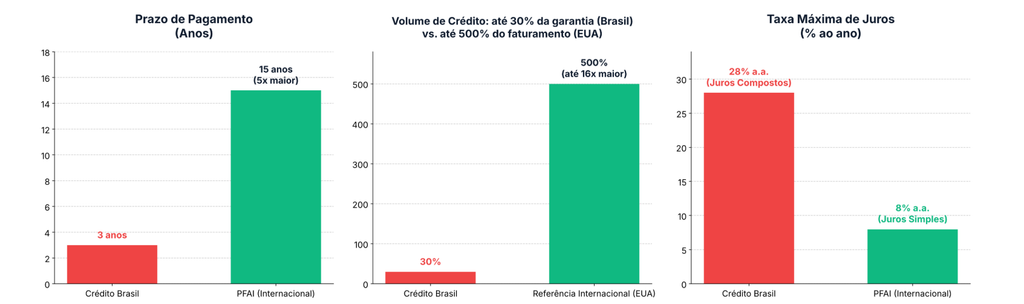
Figure 1 — English chart labels: Comparison of terms: Domestic credit vs. international credit (ACI Ecosystem). Repayment term (years): Brazilian credit, 3 years; PFAI (international), 15 years (up to). Credit volume: up to 30% of collateral (Brazil) vs. up to 500% of revenue (United States): Brazilian credit, 30%; U.S. international benchmark, 500% (up to). Maximum annual interest rate: Brazilian credit, 28% p.a. (compound interest); PFAI (international), 8% p.a. (simple interest).
Figure 1: Expanded comparison of credit terms in the Brazilian banking market and the PFAI financing structure (ACI Ecosystem).
Figure 2 — English diagram labels: Project Finance Assets Investments (PFAI) financing architecture. Off-balance-sheet structuring flow through international vehicles (SPV/SPC). 1. Asset in Brazil: Company / real estate asset (agribusiness, manufacturing, real estate). 2. Local structure: FIDC fund / debentures (internalization and governance). 3. Global vehicle: Securitization SPV (Luxembourg / United States). 4. International funding: €100 million to €400 million per project (6 to 15 years; 6%–8% p.a.). Triple A Seal: Dual legal opinion + Big Four audit + international agency rating (S&P, Fitch, Moody’s).
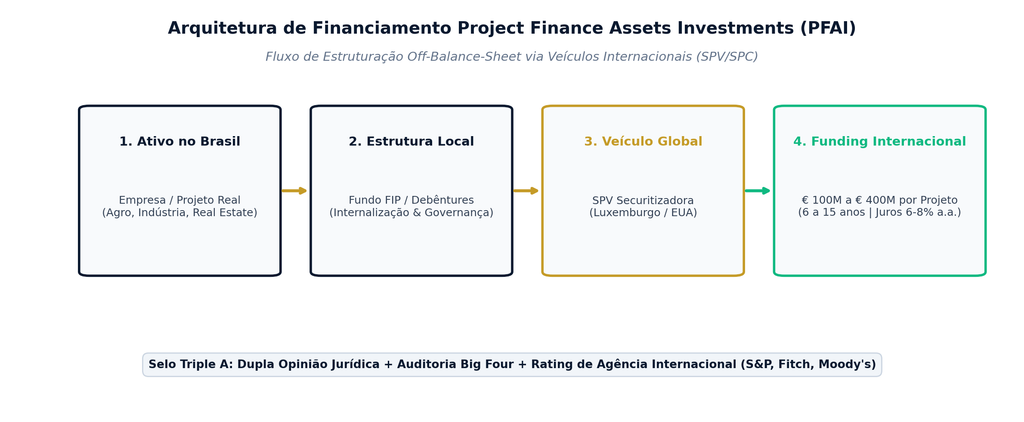
Figure 2: Operational architecture for structuring Project Finance Assets Investments (PFAI).
The entire operation follows Brazil’s Foreign Exchange Legal Framework (Law No. 14,286/2021), which replaced the provisions of the former Law No. 4,131/1962, with registration at the Central Bank through SCE-Crédito and structuring through Special Purpose Companies (SPCs) in the United States and Special Purpose Vehicles (SPVs) in Luxembourg. Because these are long-term transactions, incoming funds are subject to a zero IOF foreign-exchange tax rate (Decree No. 6,306/2007, Article 15-B). This eliminates the IOF credit tax of up to approximately 3.4% charged on domestic bank credit.
Triple A governance and the development of a new financial elite
International capital acceptance for projects originated by the ACI Ecosystem rests on a rigorous governance protocol known as the Triple A Seal. Before any asset issuance or targeted fundraising from institutional funds and syndicated loans, each project undergoes three levels of global validation: dual legal opinions issued by internationally recognized law firms in Brazil and abroad; Project Finance audited by a Big Four firm; and a formal credit rating assigned by an international credit rating agency.
Ongoing asset management is supervised through SIGP (Integrated Performance Management System), developed by Bravo to monitor and support oversight of the transaction’s four stages: structuring, fundraising, investment and divestment.
Aware that transforming the market would require the development of qualified human capital, Luciano Bravo also founded Lumnis Educacional. Recognized as Brazil’s first educational institution specializing in international credit, Lumnis offers courses with certification recognized by Brazil’s Ministry of Education (MEC) and an academic partnership with SSBM in Switzerland. Having trained more than 400 professionals and credit agents across 19 Brazilian states, the institution disseminates best practices in cross-border structuring, creating a qualified professional network capable of meeting highly complex demands.
With a substantial body of published work—including authorship of Latin America’s first book on the subject, more than 55 technical articles published in the newspaper Valor Econômico and hundreds of lectures delivered through the country’s leading corporate communications platforms—Luciano Bravo has established a benchmark for the internationalization of private debt in the region.
“Financial engineering is not just about numbers; it is about giving Brazilian companies the genuine ability to compete on equal terms in the global marketplace. When a company replaces expensive, short-term bank debt with an international Project Finance structure, it gains the liquidity needed to multiply its revenue, create thousands of jobs and transform the productive value chain in which it operates.”
Luciano Bravo
By connecting Latin America’s real assets to the abundance of capital in major financial markets, Luciano Bravo has not only built a highly sustainable business model but also redefined growth opportunities for South American entrepreneurs, establishing the ACI Ecosystem as a milestone in the continent’s recent history of corporate credit.